Disability and Female Agency in Wilkie Collins’s ‘Poor Miss Finch’ (1872)

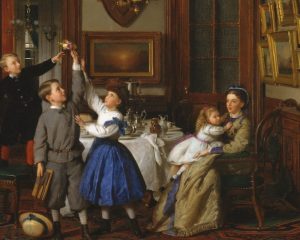
In this image by Edward Hughes, Lucilla Finch, the protagonist of Wilkie Collins’s novel Poor Miss Finch (1872) undergoes a medical procedure to cure her blindness by the German oculist Herr Grosse. The procedure is initially successful, as Lucilla regains her sight. Yet over time, Lucilla begins to lose her vision. Although she is blind by the novel’s conclusion, she rejects Herr Grosse’s offer of another operation. Lucilla’s decision is surprising, considering nineteenth-century medical views that people with disabilities were

Read more

Fridtjof Nansen and the Marketing of Polar Heroism in Victorian Britain

Late Victorian society was captivated by polar exploration. Tales of daring adventure, scientific discovery and displays of masculine courage fired the public imagination, turning ice-bound expeditions into national spectacles and explorers into celebrity figures. Expeditions, therefore, became “carefully orchestrated narratives structured to maximise publicity and dramatic appeal”.[1] The rise of mass-circulation newspapers ensured that readers’ “almost insatiable demand for coverage” was met with expedition reports, paid exclusives and promotional materials.[2] Explorers’ achievements also saturated popular culture through theatre playbills, official

Read more

Separate spheres? Expectations of the Victorian woman

A woman gently lifts the arm of her seven-year-old son to wrap a bandage around his wound. She smiles softly in encouragement when he cries out in pain, brushing walnut coloured hair out of his eyes. She kisses him on the forehead and leaves him to rest. She wanders in the marketplace, surveying the selection of furniture before her. A new dining table is needed, as well as a new chandelier to go with it. It is her job to

Read more

‘Out of Style’: Taylor Swift, Genre, and the Victorian Novel

Known all too well for her name in popular culture, Taylor Swift is gaining a reputation in literary circles, too. To enchanted listeners, she’s not just a singer-songwriter; she’s a poet as well. Following the release of Swift’s eleventh album, The Tortured Poets Department (2024), Stephanie Burt published an article in The Nation that recognised Swift’s mastery of literary devices, ranging from apostrophe and hyperbole to slant rhyme. Burt is certainly not alone in her attention to Swift as a

Read more

How Victorian jewellery both shaped and reflected changes in society

Jewellery’s evolution in the 1800s highlights many of the economic and moral changes that transformed British society during the Queen’s 63-year reign. Jewellery is a private, yet paradoxically the most visible, sign of these social shifts. The growth of personal autonomy meant it was worn on the body, exchanged in love and carried into mourning — yet its evolution was based on the large-scale trends of imperial expansion and technological advance. From Tudor exclusivity to Victorian ubiquity By the nineteenth

Read more

Reading Toru Dutt as a ‘Romantic’ Urban Nature Poet

Sing his name, o dear, who in this far land Sings your name in all his songs for Bengal. Michael Madhusudan Dutt, ‘Kapatakkha River’. This essay reads nineteenth-century poet Toru Dutt’s work as a Bengali author’s successful attempt to write the Romantic sonnet in English, but within a Bengali context. Dutt achieves this both by being influenced by, and deviating from, the poetics of the British Romantics. The poems in focus are ‘Sonnet — Baugmaree’ and ‘Sonnet — The Lotus’,

Read more

Itinerants and Travellers in the Nineteenth Century

1841 was the year of the second national British census. It was also the year that Charles Dickens completed the serial publication of The Old Curiosity Shop and published it in book form. Less famously, 1841 saw the appearance of a two-volume travelogue called The Zincali: An Account of the Gypsies of Spain. The author was the little-known George Borrow (1803-1881). In the 1820s and 1830s, Borrow traveled extensively through England, France, Germany, Spain, Morocco, and Russia. His official business,

Read more

Resource: the Charles Dickens Illustrated Gallery

Available at CharlesDickensIllustration.org, the Gallery contains over 2000 free-to-use illustrations for teachers, educators or creatives to do whatever they like with, taken from the most significant illustrated editions of Dickens’s works up to 1912 (the centenary of his birth). The project launched about 18 months ago now, with just the original illustrations (about 700 images), and now also features the illustrations from the Household Edition, Library Edition, and the ‘Pears’ Centenary Edition of the Christmas Books.

Read more

“Willows whiten, aspens shiver”: A Reading of Affects in Alfred, Lord Tennyson’s “The Lady of Shalott”

Alfred, Lord Tennyson’s ‘The Lady of Shalott’1 creates an anachronistic medieval ambience by borrowing the mythical figures of Dame Elaine of Astolat and Lancelot, the feudal settings of Camelot, and the manorial island of Shalott. As a complex blend of medieval and Victorian motifs, it also creates an interesting intersection between medieval and Victorian affects. This essay brings to the fore the constructedness of affects as social artefacts in the poem, which become embedded in a network of material or

Read more

A Royal Seal of Approval: P. T. Barnum in Europe

On a cold February day in 1844, a small group of travellers disembarked their ship at the port of Liverpool in England. There was no welcoming party, no bands nor banners, and the visitors slipped silently away to their hotel. Amongst them were the American showman P. T. Barnum and his protégé Charles S. Stratton, known as General Tom Thumb. Both were little-known in England at that time, but this would mark the beginning of a three-year-long tour of the

Read more