
Sing his name, o dear, who in this far land
Sings your name in all his songs for Bengal.
Michael Madhusudan Dutt, ‘Kapatakkha River’.
This essay reads nineteenth-century poet Toru Dutt’s work as a Bengali author’s successful attempt to write the Romantic sonnet in English, but within a Bengali context. Dutt achieves this both by being influenced by, and deviating from, the poetics of the British Romantics. The poems in focus are ‘Sonnet — Baugmaree’ and ‘Sonnet — The Lotus’, anthologised in Ancient Ballads and Legends of Hindustan (2007).
In ‘The Romantic Sonnet’ (2011), Michael O’Neill notes that the sonnet was a deeply ‘paradoxical’ genre, as it fused ‘imagination’ with ‘public concern’. While spatially it is written in a fourteen-line ‘nutshell’, expert sonneteers could create an ‘infinite space’ for imaginative dwelling by writing within this ‘nutshell’.
William Wordsworth, in ‘Scorn not the Sonnet’ (1827), celebrates this genre as a ‘trumpet’ singing ‘Soul-animating strains’. In his meta-fictional ‘On the Sonnet’ (1819), John Keats calls for English poetry to reclaim the sonnet and employ it innovatively to unshackle the chains of the ‘dull rhymes’ that, according to him, had been plaguing English verse.
The depiction of nature and rural solitude in an unvarnished, pre-industrial country landscape became a staple for sonneteers to draw from. Some examples of this are: Thomas Warton’s ‘To the River Loden’ (1777), William Lisle Bowles’s Fourteen Sonnets (1789), Samuel Taylor Coleridge’s ‘To Nature’ (1820) and William Wordsworth’s ‘The River Duddon: After-Thought’ (1820). These sonnets were marked by an intense effusion of strong feelings evoked by the sublime landscapes in the minds of the poets. Coleridge, in ‘To Nature’, reveals a ‘Deep, heartfelt, inward joy that closely clings; And trace in leaves and flowers that round me lie Lessons of love and earnest piety’. In ‘The River Duddon’, the poet-speaker imagines a gently-flowing Duddon to be his ‘partner and…guide’ and this association with the river makes him feel that ‘We feel that we are greater than we know’. Thus, pantheistic nature provides a joyous transcendent escape from the world of negotium into otium for these Romantic poets. The sonnet emerges as an ideal way to express the same. Both Wordsworth and Coleridge scorned the urban world as lacking the ethereal beauty and goodness that nature sustained.
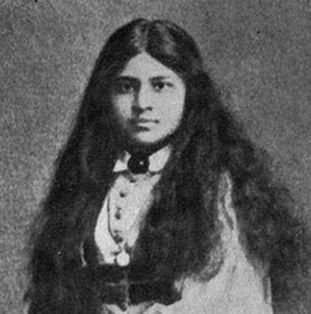
Natalie Phillips calls Toru Dutt’s poetry a fusion of the East and the West. Dutt grew up in Bengal, France and England. Utilising the Romantic conceptions of depicting idealised natural beauty in poetry, Dutt ‘refashions’ this European genre in an Indian context, as Alisson Chapman notes. This can be better explained by looking at some of her sonnets, like ‘Sonnet — Baugmaree’ and ‘Sonnet — The Lotus’, anthologised in Ancient Ballads and Legends of Hindustan (2007).
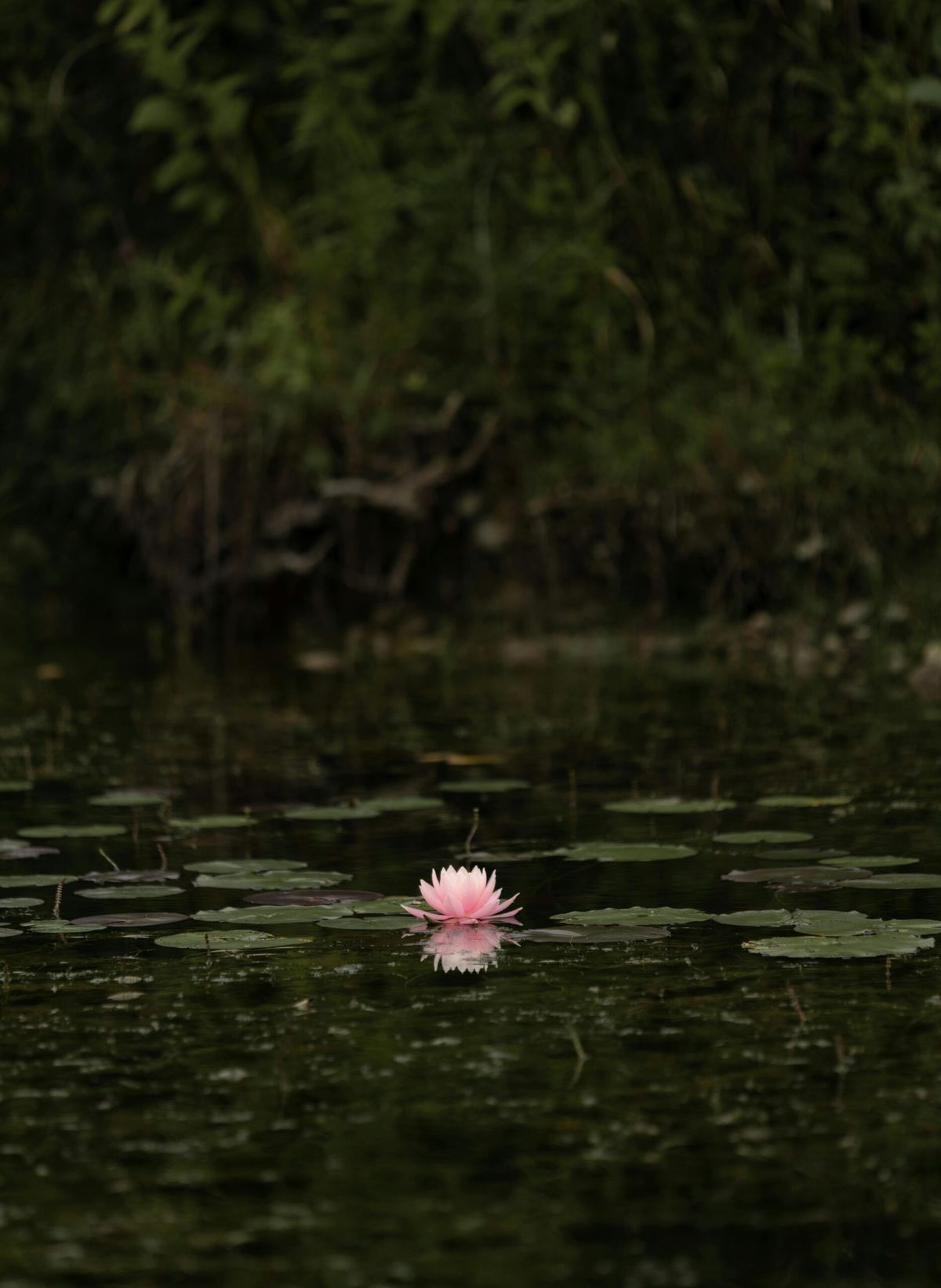
Dutt writes back to the British sonnet and English literary and cultural hegemony in the sonnet ‘The Lotus’. Here we find two European flowers, commonly revered in the literary and cultural imagination as the epitome of beauty: the rose and the lily. The lotus, Dutt notes, is a ‘flower delicious as the rose’ and ‘stately as the lily’. Thus, Dutt, a Bengali writer, creates a literary space for Romantic sonneteering distinctly Indian, and specifically Bengali, in flavour.
The subtle critique of British literary hegemony is powerfully expressed in the expertly crafted ‘Sonnet — Baugmaree’. In this sonnet, Dutt depicts in Romantic verse a Bengali garden. These kinds of gardens are very distinct from the traditional, urban, gigantic homes where the spacious gardens are a sea of flora and, often, small fauna, in the midst of the concrete jungle of Kolkata. Houses and gardens like the one described in the sonnet are still found in corners of the city. Thus, a poem like this can be read in relation to gardens which are extant today as well. Additionally, these great houses are rapidly being torn down for the construction of high rises. The literary writings of Dutt can be a touchstone for exploring these sub-genres of what could be called the ‘Bengali Urban Pastoral’. These can become cultural mementoes of life and times in a city long past.
The garden in the poem is a Wordsworthian ‘primaeval Eden’. This is where the parallel ends, and Dutt creates a distinctly Bengali ‘Eden’. Dutt explicitly states that this is not a Romantic British space of mind-numbing ‘dull unvaried green’. Rather, the ‘sea of foliage’ exhibited in the garden is delightfully colourful, and the flurry of images is distinctly Indian. The Romantic canvas of Dutt’s garden is populated by ‘mangoe clumps of green profound’ palms, seemuls and bamboos, and white lotus; flora which was not endemic to Britain. Thus, we have a very distinctly Indian garden in a European genre.
Further, the ‘dull unvaried green’ of British poetry is replaced by a host of colours in the text. For example, there is a ‘startling’ repetition of the word ‘Red’ to depict the Seemul trees. The colour red does not usually feature in English Romantic nature poetry. Further, this sonnet is primarily a description of a garden and does not give rise to transcendental feelings in the mind of the author, which is another way of deviating from the existing British tropes of writing Romantic poetry. These deviations are crucial, since nature in a country like India is vastly different from a place like England. The rolling Scottish country hills and the dales are often secluded spaces. In India, however, the countryside is often a built-up and populated area. Further, in an age of rapidly expanding cityscapes, even these meagre ‘retreats’ from the urban spaces are becoming gradually subsumed into the city, owing to population pressure due to immigration in cities from rural parts. In this context, gardens can perhaps become one of the only Romantic, Wordsworthian ‘retreats’ into nature in a country like India.
Poems like ‘Sonnet — Baugmaree’ might inspire poets of the day to write along similar lines and develop the genre of Bengali or Indian ‘urban pastoral’, thereby giving rise to a new genre of nature-writing, authored in the Romantic vein at a time when interest in nineteenth-century literary studies is declining.
Dipyaman Bhowmick is a first-year postgraduate student in the Department of English at Jadavpur University, Kolkata. His academic interests include Gothic literature, environmental humanities, Romantic and Victorian studies.
Notes & references
Chapman, Alison. ‘Internationalising the Sonnet: Toru Dutt’s “Sonnet – Baugmaree”‘. Victorian Literature and Culture, 2014, Vol. 42, No. 3 (2014), pp. 595-608.
Phillips, Natalie. ‘Claiming Her Own Context(s): Strategic Singularity in the Poetry of Toru Dutt’. Nineteenth-Century Gender Studies. Issue 3.3. Winter, 2007.
Howarth, Peter and Cousins, A.D. The Cambridge Companion to the Sonnet. Cambridge University Press, UK, 2011.
Dutt, Toru. Edited by Edmund Gosse. Ancient Ballads and Legends of Hindustan. 2007.
Coleridge, Samuel Taylor. ‘To Nature’. 1820.
Keats, John. ‘On the Sonnet’. 1819.
Wordsworth, William. ‘Scorn not the Sonnet’. 1827.
Wordsworth, William. ‘The River Duddon: After-Thought’. 1820.